I. Building a B2B Fitness Powerhouse
Cult.fit's vibrant mix of fitness and wellness services transcends its B2C success. This strategy explores a bold expansion into the B2B market, aiming to generate 12 crores in revenue within a year. By unlocking employee potential through holistic well-being, Cult.fit can become a vital partner for forward-thinking companies.
II. Navigating the Landscape:
- Fitness-as-a-Service (FaaS): GymPass and ClassPass provide flexible access to studios, ideal for geographically dispersed workforces.
- On-site fitness solutions: Wellbeats installs gyms or equips offices, fostering convenience and community.
- Corporate wellness programs: Virgin Pulse and Limeade design holistic programs, including fitness challenges and mental health support.
III. Why? Here's data-driven proof:
- Companies with wellness programs report a 28% reduction in sick days and a 26% reduction in healthcare costs.
- Employees who exercise regularly are 23% more productive than those who don't.
- Companies with wellness programs report a 19% reduction in employee turnover.
IV. Learning from the Champions:
i. Personalized Approach: Mimic Virgin Pulse's strategy of customizing recommendations based on employee data. Analyze fitness levels, health history, and preferences to curate meaningful wellness programs and fitness challenges.
ii. Content Marketing: Leverage Wellbeats' success with blogs and videos to educate companies on corporate wellness. Provide actionable insights and tips, tailored to address specific pain points and challenges. Host webinars and invite instructors to create engaging content.
iii. Compelling Testimonials: Showcase impact using case studies that highlight quantifiable benefits and reduced healthcare costs, like Limeade's Delta Dental example. Use before-and-after narratives, data points, client videos, and testimonials strategically.
V. Sales Tactics for Cult.fit:
- Themed fitness challenges: Partner with companies to build team spirit and showcase diverse class options.
- Fitness pop-ups: Set up temporary studios in co-working spaces or offices, generating buzz and offering free trials.
- Data-driven ROI simulations: Develop a tool that uses company data to project potential cost savings and productivity gains from Cult.fit memberships.
- Free health assessments: Offer complimentary assessments to highlight the need for well-being interventions.
- Executive wellness retreats: Build relationships with key decision-makers through exclusive weekend experiences focused on physical and mental well-being.
- Gamified employee engagement: Use fitness trackers and apps to integrate Cult.fit activities into company-wide competitions, boosting motivation and participation.
V. Refining the B2B Strategy:
i. Targeted lead generation: Utilize LinkedIn Sales Navigator and relevant industry events to reach specific decision-makers.
ii. Compelling storytelling: Weave real-life success stories from existing clients into presentations, connecting emotionally.
iii. Flexible pricing models: Offer tiered options and custom packages to cater to diverse budgets and needs.
Package 1: Corporate Fitness Foundation (CFF)
- Target audience: Startups, co-working spaces.
- Package includes: Cult pass home access for all employees, monthly challenges and contests, 2 free ELITE gym trial passes per employee.
- Price: ₹250 per employee per month (₹3000 per year).
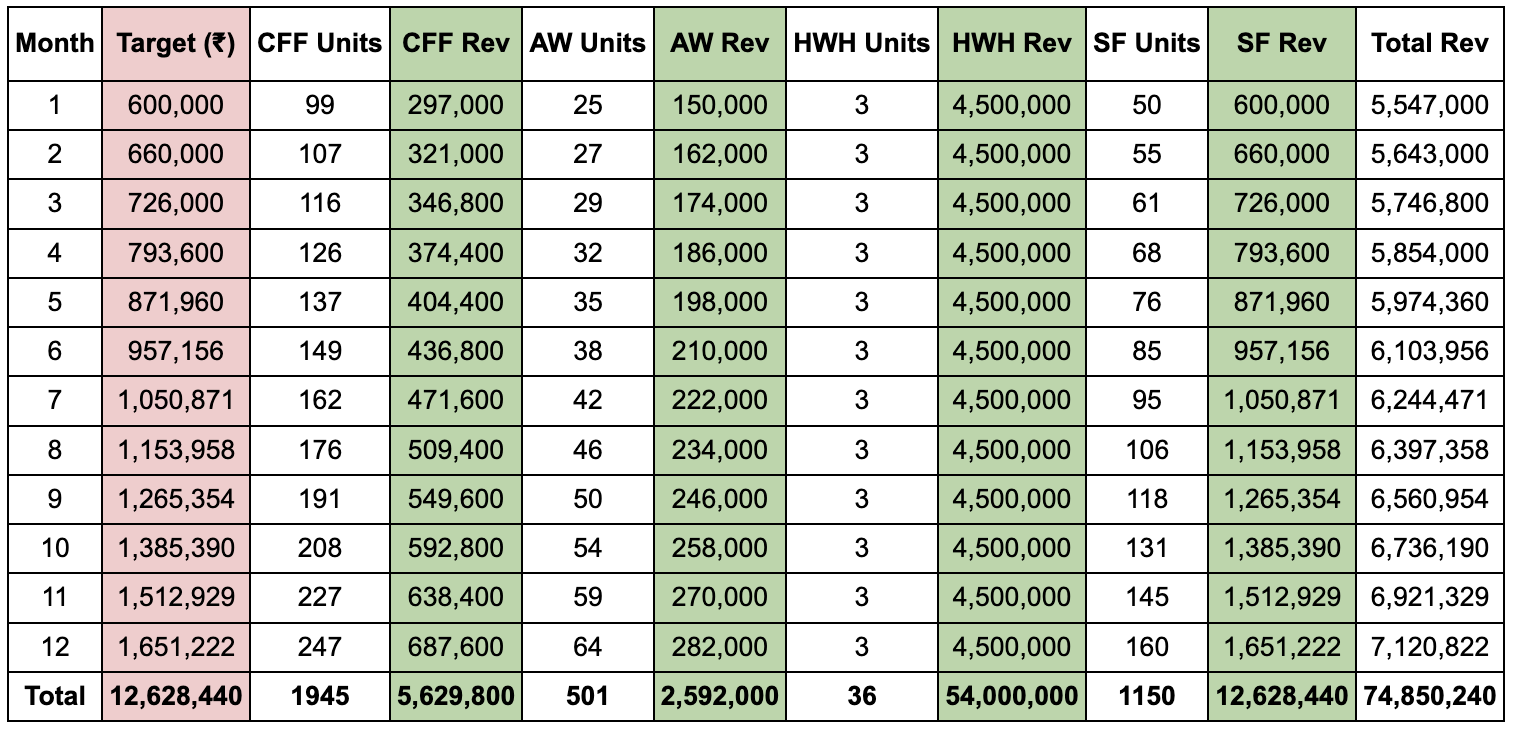
- Potential revenue: Assuming 10,000 employees across 20 startups and co-working spaces: ₹2,500,000 per year.
Package 2: Active Workforce (AW)
- Target audience: Large corporations with existing wellness initiatives.
- Package includes: Cult pass home access for all employees, discounted group classes at nearby centers, quarterly corporate fitness challenges, data-driven wellness reports.
- Price: ₹500 per employee per month (₹6000 per year).
- Potential revenue: Assuming 20,000 employees across 10 large corporations: ₹1,200,000 per year.
Package 3: Holistic Wellness Hub (HWH)
- Target audience: Forward-thinking corporations with a strong commitment to employee well-being.
- Package includes: On-site or dedicated Cult.fit center within the company premises, full access to ELITE gyms and group classes for all employees, mindfulness library access, annual lab tests for employees, personalized wellness coaching.
- Price: Custom per company, based on employee headcount and space requirements.
- Potential revenue: Assuming 3 large corporations with customized packages at ₹50 lakhs each: ₹1,50,00,000 per year.
Package 4: Sports Fanatics (SF)
- Target audience: Companies with sports-loving employees or looking to promote team building.
- Package includes: Access to cult-pass-play across all centers, guaranteed weekly slots for badminton, swimming, or other sports, expert coaching sessions, tournament organization for company teams.
- Price: ₹1000 per employee per month (₹12,000 per year).
- Potential revenue: Assuming 500 employees from 5 sports-loving companies: ₹6,000,000 per year.
Additional Revenue Streams:
- Corporate merchandise partnerships: Partner with companies to co-brand merchandise like gym bags, water bottles, etc., with sales shared.
- Corporate wellness workshops and seminars: Offer targeted workshops on stress management, nutrition, healthy habits, etc., for an additional fee.
- Data-driven insights and consulting: Analyze employee fitness data and provide comprehensive reports and recommendations to companies for optimizing their wellness programs.
iv. Data-driven emphasis on ROI: Quantify Cult.fit's impact with robust analysis and reporting, demonstrating tangible benefits.
v. Strong B2B sales team: Invest in dedicated professionals with experience in health and wellness solutions.
vi. Partnerships: Exploring strategic partnerships with health insurance providers, corporate wellness consultants, and human resource organizations to reach a wider audience and gain credibility.
vii. Social media marketing: Utilize LinkedIn, Twitter, and other relevant platforms to share success stories, industry insights, and engaging content to attract potential clients.
VI. Target Audience:
- Large corporations (500+ employees): Companies with existing wellness initiatives or a strong emphasis on employee well-being.
- Startups: High-growth companies with young, fitness-conscious workforces.
- Co-working spaces: Catering to the diverse fitness needs of members.
VII. Value Proposition:
- Enhanced employee engagement and productivity: Studies show a clear link between fitness and improved employee morale, motivation, and cognitive function.
- Reduced healthcare costs: A healthier workforce translates to fewer sick days and lower insurance claims, leading to long-term cost savings.
- Elevated company culture: Cult.fit can be positioned as a unique perk that attracts and retains top talent, fostering a vibrant and healthy work environment.
- Convenience and customization: On-site or nearby Cult Fit centers, diverse class options, and flexible scheduling cater to busy professionals.
- Data-driven insights: Access to employee fitness data allows companies to track progress and adapt programs for maximum impact.
- Improved employee well-being: Highlight the positive impact of Cult.fit on mental health, stress reduction, and overall well-being, leading to a happier and more productive workforce.
- Enhanced employer branding: Position Cult.fit as a valuable perk that attracts and retains top talent, showcasing the company's commitment to employee well-being.
- Reduced absenteeism: Emphasize the link between improved employee fitness and reduced sick days, leading to cost savings for companies.
VIII. The B2B Sales Funnel:
- Lead generation: Utilize LinkedIn outreach, targeted email campaigns, industry events, and partnerships with corporate health providers.
- Discovery: Conduct in-depth needs assessments with key decision-makers to understand company culture, employee demographics, and wellness goals.
- Proposal development: Tailor a customized package with flexible membership options (individual, group, discounted subscriptions) addressing specific needs.
- Presentation and negotiation: Present the value proposition and ROI, address concerns, and negotiate mutually beneficial terms.
- Onboarding and retention: Streamline membership signup, provide ongoing support and engagement initiatives, and track satisfaction through regular feedback loops.
- Offer free trials: Provide companies with the opportunity to experience Cult.fit firsthand.
- Gather client feedback: Regularly solicit feedback to understand their needs and continuously improve the B2B program offerings.
IX. Sales Collateral:
- Interactive ROI calculator: Develop a user-friendly tool that allows companies to estimate potential cost savings from implementing Cult.fit's program based on their specific employee demographics and health data.
- Employee testimonial videos: Showcase real-life experiences of employees benefiting from Cult.fit memberships, highlighting improved health, increased motivation, and enhanced work-life balance.
- Industry-specific case studies: Develop case studies showcasing successful implementations of Cult.fit's program in specific industries, demonstrating its effectiveness across diverse sectors.
- Company wellness white paper: Partner with a respected health or wellness organization to co-author a white paper quantifying the ROI of corporate wellness programs using data and case studies.
X. Revenue Milestones:
- A phased implementation plan - INR 12 crore annual revenue
XI. Metrics to Track:
- Lead generation: Conversion rate from lead to qualified prospect.
- Sales process efficiency: Average time to close a deal.
- Customer acquisition cost: Cost of acquiring each new corporate member.
- Customer churn rate: Percentage of companies canceling memberships.
- Employee engagement: Participation rates in Cult Fit classes and programs.
- Track employee satisfaction with Cult.fit programs through surveys and feedback mechanisms.
- Monitor employee participation rates in different types of classes and activities to identify areas of interest and optimize program offerings.
- ROI metrics: Track cost savings related to healthcare claims and absenteeism.
XII. Conclusion:
By embracing a B2B strategy informed by creativity, data, and targeted tactics, Cult.fit can unlock a new revenue stream while contributing to healthier, happier corporate cultures. The commitment to employee well-being, combined with Cult.fit's unique offerings, will pave the way for sustainable growth and a solidified position as a leading force in B2B fitness solutions.
XIII: Contingency Plans:
i. Competition from existing B2B wellness providers.
Mitigation:
- Differentiate through superior value proposition: Emphasize targeted customization, data-driven insights, and unique offerings like on-site centers and gamified engagement.
- Undercut competitors on price: Consider introductory offers or flexible pricing models to gain initial traction.
- Partner with existing providers: Explore strategic partnerships to expand reach and leverage complementary strengths.
ii. Difficulty acquiring high-profile corporate clients.
Mitigation:
- Invest in a dedicated B2B sales team: Recruit experienced professionals with a strong track record in selling fitness solutions to corporations.
- Leverage existing clients as references: Secure testimonials and case studies from successful early adopters.
- Participate in relevant industry events and conferences: Showcase Cult.fit's B2B program to key decision-makers.
iii. Challenges in scaling operations to meet B2B demand.
Mitigation:
- Develop a phased implementation plan: Gradually onboard new clients to ensure smooth and efficient scaling.
- Invest in technology and infrastructure: Upgrade systems to handle increased data and manage employee fitness information effectively.
- Partner with fitness studios or co-working spaces: Explore partnerships to provide temporary or on-demand studio access for larger client bases.
iv. Difficulty achieving projected ROI for clients.
Mitigation:
- Provide ongoing support and program refinement: Regularly consult with clients, analyze data, and adapt programs to maximize impact.
- Offer data-driven ROI forecasting tools: Develop personalized estimates of potential cost savings and productivity gains based on client-specific data.
- Track and communicate successes transparently: Share metrics and case studies demonstrating the positive impact of Cult.fit on employee well-being and business outcomes.
v. Unanticipated changes in market conditions or economic downturn.
Mitigation:
- Maintain a flexible pricing model: Offer subscription options with lower entry points and allow adjustments based on client needs.
- Focus on essential value propositions: Emphasize cost savings and return on investment during economic challenges.
- Diversify client base: Expand into different industries and company sizes to minimize risk from any single sector.
XIV. Assumptions:
i. Market Assumptions:
-
Growing corporate wellness market:
-
Compound annual growth rate (CAGR) of 6.9% projected for the global corporate wellness market (Precedence Research, 2023).
- 53% of organizations offer wellness programs globally (Global Wellness Institute, 2022).
-
A significant number of employers cite employee well-being as a top organizational priority (Randstad Employer Brand Research, 2023).
-
Cult.fit offerings meet B2B needs:
-
B2B fitness market segment expected to reach USD 5.86 billion by 2029 (Grand View Research, 2023).
- Cult.fit offers similar features to successful B2B providers (flexible access, diverse classes, data-driven insights) at potentially lower price points.
-
Existing B2C success demonstrates adaptability and appeal to diverse needs.
-
Demand for on-site fitness centers exists:
-
42% of employers offer on-site fitness facilities (Society for Human Resource Management, 2023).
- Trend towards hybrid workplaces may further increase demand for convenient access to wellness options.
- Focus on target audiences with existing wellness initiatives or strong emphasis on employee well-being.
ii. Financial Assumptions:
-
Competitively priced packages:
-
Pricing benchmarked against existing B2B providers and adjusted to specific target market segments.
- Introductory offers or tiered pricing options offered to attract initial clients.
-
Cost-benefit analysis demonstrating ROI potential for companies provided during sales presentations.
-
B2B program costs:
-
Detailed costing models developed for each package considering marketing, technology, and personnel expenses.
- Continuous monitoring and optimization of cost variables throughout implementation.
-
Utilizing partnerships and outsourcing opportunities to maximize cost efficiency.
-
Target revenue of 12 crores in a year.
iii. Operational Assumptions:
-
Cult.fit can handle large client influx:
-
Phased implementation plan gradually onboarding clients and allocating resources effectively.
- Investment in scalable technology infrastructure to manage data and employee information.
-
Strategic partnerships with fitness studios or co-working spaces for temporary or overflow access.
-
Partnerships with key stakeholders:
-
Rigorous partner selection process based on alignment with values, expertise, and target audience reach.
- Clear communication of expectations and mutually beneficial agreements established.
-
Joint marketing and promotional initiatives to leverage partner networks and amplify reach.
-
Utilization of data-driven insights:
-
Partnerships with data analytics specialists or development of in-house expertise.
- Investment in user-friendly data visualization tools for easy interpretation and action.
- Regular program refinement based on insights and client feedback.